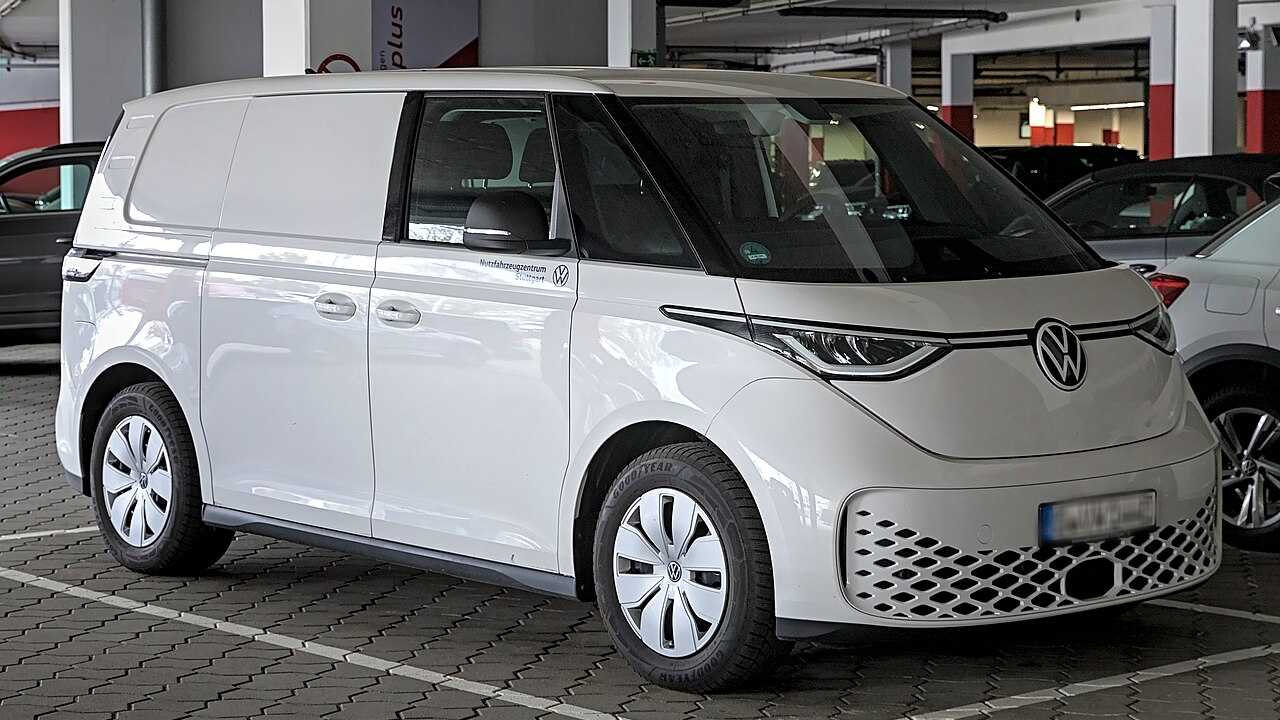
Volkswagen has started building a longer version of its electric panel van. Series production of the long-wheelbase ID. Buzz Cargo began at the Hanover plant on 23 November.
For VW’s commercial team this is a load-space story: more room in the back, and a Euro pallet that finally fits through the side door. For the UK conversion trade it reads differently. It is more usable floor on an electric base, and a second route to an electric camper that does not run through VW’s own factory.
UK specification and pricing are not here yet. The company expects them in early 2027. That gap is the window converters should use.
What VW Has Actually Built
Strip the marketing and the change is small but specific. The Cargo load bay is 250mm longer than the standard van, at 2,458mm, and load volume rises by half a cubic metre to 4.4.
The battery is an 86 kWh net pack as standard. Buyers pick rear-wheel drive at 210 kW (286 PS) or 4MOTION all-wheel drive at 250 kW (340 PS).
Braked towing runs to 1,800 kg, high for an electric van this size. That matters if a buyer wants to tow as well as camp, and the NCC’s free EV towing guide is worth having to hand when they ask.
Electrive puts the WLTP range at up to 490 km, around 300 miles. Treat that as a ceiling, not a working figure. A stripped Cargo on a test cycle is not a finished camper carrying a kitchen, a bed and two people’s kit.
Why the Extra 250mm Matters to Converters
A campervan layout lives or dies on floor length. 250mm is not a rounding error when you are fitting a rock-and-roll bed, a galley and a usable gangway into a compact van.
Converters already build on the ID. Buzz, mostly on the passenger version with its seats and trim to work around. UK outfits like CamperKing have shown there is appetite to bring that work in-house. A Cargo LWB arrives as an empty, flat-floored box: less to strip out, a longer run to place the bed, more freedom in the layout.
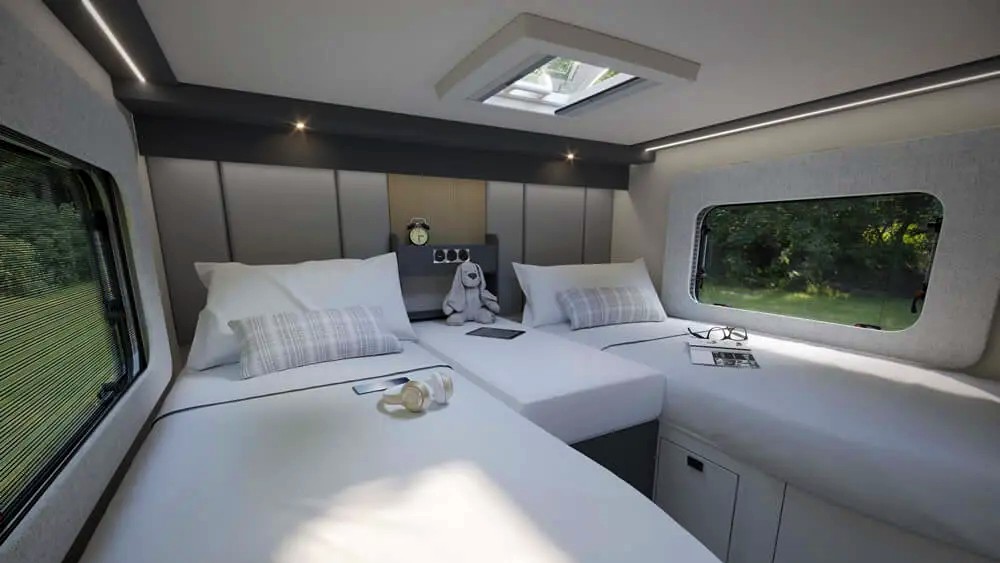
That changes the sort of camper you can sell. The standard ID. Buzz converts into a weekender. The longer Cargo opens the door to a proper two-berth with a fixed layout, closer to a small California in feel but fully electric.
VW is not leaving that space alone. The ID. Buzz California and Beach sit in its own camper line, built at the same Hanover plant. It is part of a wider move by manufacturers to build campers in-house rather than leave them to converters.
The independent trade now competes with the factory on the passenger base, and gets a cleaner run at the Cargo.
What UK Converters Should Do Before Early 2027
You cannot price a build on a van you cannot order yet. You can get ready to.
- Ask VW for the payload figure in writing before you design anything. An 86 kWh battery is heavy, and the weight left over for a conversion is the number that decides whether your layout is legal and sellable.
- Quote range laden, not from the brochure. Tell buyers what the camper does with people and kit aboard, and you head off the complaint that kills referrals.
- Build your electrical spec around the vehicle battery and the optional PowerSocket. An electric base changes how you sell leisure power, and the honest pitch is lower running cost, not off-grid for a week.
- Open a deposit list now. Wellhouse sold out its electric Kia PV5 camper before most buyers had seen one in the metal. Take names before launch and you set the queue rather than join it.
The Bigger Signal
Two years ago an electric camper base meant a compromise van and a nervous customer. VW has now put a longer, higher-towing electric van into series production and promised UK pricing within months.
The question for the trade is no longer whether the electric camper has a base vehicle. It does. The question is who gets the build spec right first: VW’s factory lines, or the converters who know their own buyers better than Wolfsburg does.
Which one is your workshop?
Image: Volkswagen ID. Buzz Cargo by Alexander Migl (Alexander-93), cropped, via Wikimedia Commons, licensed under CC BY-SA 4.0.