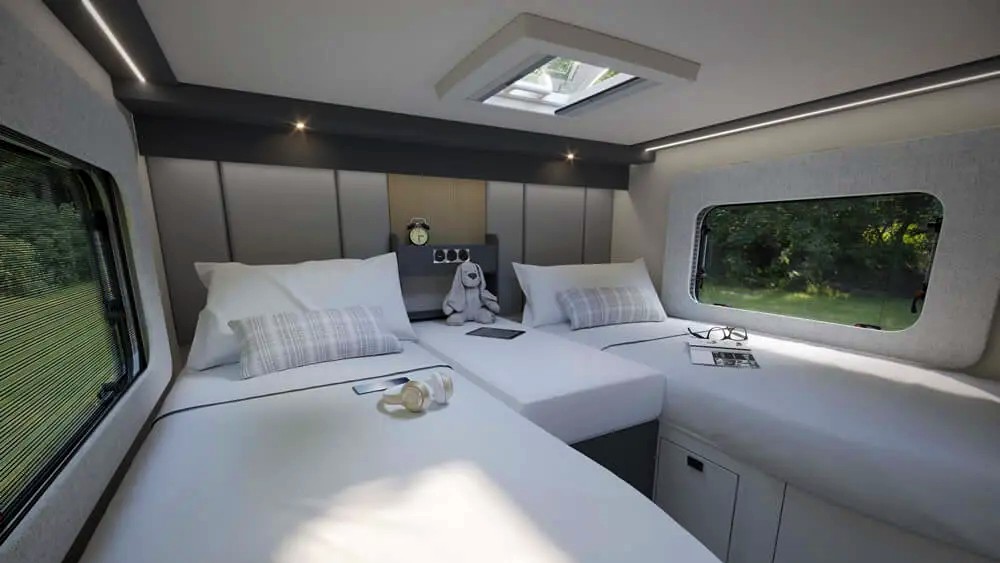
Ace has added a third range to a brand that did not sell a single motorhome a year ago. At the Motorhome and Caravan Show in October it launched the Supreme, a premium coachbuilt line sitting above its existing 1500.
The launch copy leans on luxury, comfort and a home from home. Set that aside. The figure that matters is the speed.
Swift retired the Ace name more than fifteen years ago, brought it back this year, and is already widening the range. It is doing it through a dealer network it built from scratch and runs apart from its own.
A manufacturer does not stand up a second brand, a second website and a separate dealer network, then grow the range inside its first year, by accident. It is buying shelf space. That, not the Supreme’s mattress, is the part worth a dealer’s time.
What Ace Has Actually Launched
Strip the marketing and here is the product.
The Supreme is a coachbuilt range on the Ford Transit chassis. It runs a 2.0-litre 130bhp diesel with a manual gearbox as standard, and a 165bhp automatic on the options list. There are four layouts:
- DB: fixed double island bed
- EW: convertible front lounge with a rear washroom
- SL: fixed twin beds over a garage
- ET: convertible front lounge, rear washroom and a larger garage
Each comes as a two-berth, with a four-berth option on every layout except the EW. Inside, Ace lists a 2110mm standing height, a Thetford combination oven with a three-burner hob, a Dometic slimline fridge and a Duvalay mattress.
Ace positions Supreme as the 1500 with more on it, rather than a new idea. That reading holds. The spec is a step up, not a departure.
Ace has now put prices on it. The Supreme starts at £75,500 on the road for the two-berth EW and runs to £79,400 for the four-berth DB.
That price is worth a second look. A new motorhome cost £76,137 on average in the UK in 2025, so Ace’s premium tier lands on the market average, not below it. The value in Ace is the brand’s pitch, not a cut-price sticker on this range.
Why Swift Runs Ace at Arm’s Length
Here is the part the product page will not tell you.
Ace is Swift. The Supreme is designed and built at Swift’s Cottingham factory near Hull, on the same lines as Swift’s own motorhomes. But Swift runs Ace as a separate brand, with its own name, its own website and its own dealers.
That dealer network is growing. It has gone from around twenty at launch, by Practical Motorhome’s count, to twenty-five across the UK now.
That separation is the strategy. Swift keeps the Swift badge where it is and uses Ace to chase a value-first buyer, without discounting its main range to do it. Two price positions, held at once, through two sets of dealers.
The relaunch has landed well enough to justify pressing on. The Ace 1200 SLT campervan took its category at the 2026 Motorhome and Campervan Design Awards, an independent panel’s verdict rather than Swift’s own marketing. Adding the Supreme months later is Swift reading that result and backing it.
It is doing all of this into a flat market. New motorhome and campervan registrations hit a record 16,668 in 2025 on NCC figures, but that was a 1.3% rise on the year, not a surge, and the gate at this year’s NEC show has flattened.
When the market stops making new buyers, makers fight over each other’s share. Swift is not the only one playing it this way. Hobby relaunched in the UK as Aura to build a fresh dealer network free of its old baggage, and KABE is building UK motorhomes under Coachman to push the premium end.
A separate Ace network is the same move in Swift colours. More routes to the buyer, in a market that is not making more of them, and aimed at the end that is holding up, with motorhomes still outrunning caravans.
What This Means for UK Dealers
What you do next splits by whether you already hold the Ace franchise.
If you hold Ace, use Supreme to keep the trade-up in house. An owner moving on from a 1500 can now stay in the range instead of walking to a Swift dealer or a rival. Put the full spec and the on-the-road prices on the model page. Show the payload on every build, so a weight-conscious buyer can choose with the number in front of them.
If you do not hold Ace, know a second Swift network is forming near you. Twenty-five dealers now, and still filling in. Decide whether it is a franchise worth asking about or a competitor you will price against on the same Ford Transit base. Do not be the last on your patch to notice it.
Do not read a fast-growing range as a growing market. Swift adding a third Ace line in a year is a grab for share, not proof of fresh demand. Registrations rose barely 1%. Pull your own motorhome sales by price band before you give Supreme showroom space, and stock it for where your buyers actually sit, not where the launch points.
What It Means for Buyers
For the buyer, Supreme offers Swift build quality on a familiar Ford Transit base, with the servicing and parts network of the UK’s largest leisure maker behind it.
Two honest caveats come with that. Priced from £75,500 and sitting around the new-motorhome average, Supreme is not the bargain a value badge might lead a buyer to expect. And a brand brought back this year has no second-hand track record, so residual values are an open question, the same one hanging over every revived badge.
The answer to both is time, not a brochure line. A buyer spending this kind of money is entitled to ask, and a dealer should have the answer ready.
The Signal for Next Year
Strip away the show stand and Supreme is a modest range extension. Read it next to the separate website and the separate dealer network and it is something larger. Swift is building a second motorhome business alongside its first, and feeding it ranges fast, while the market stands still.
That is a confident bet in a flat year. It pays off if the Ace network reaches buyers the Swift badge cannot, and if a name off the shelf for fifteen years can carry a premium price from a standing start.
So here is the question for your forecourt. Swift has decided two brands beat one for winning motorhome space in a market that is not growing. When the maker behind your best-selling range starts building a second one down the road, are you selling it, or selling against it?