Eberspächer will show three products at CMT 2027 in Stuttgart: a roof air-conditioning unit, a lithium power bank and a wireless switch module.
Read as a show stand, that is three gadgets. Read as a strategy, it is a diesel-heater company assembling the entire electrical and climate system that sits above a motorhome’s habitation battery.
That second reading is the one worth your attention. Eberspächer is the name most UK converters know for the Airtronic diesel heater. The kit it is taking to Stuttgart in January points somewhere else.
What Eberspächer Is Actually Taking to Stuttgart
Three products, on Booth 10H61 in Hall 10, from 16 to 24 January.
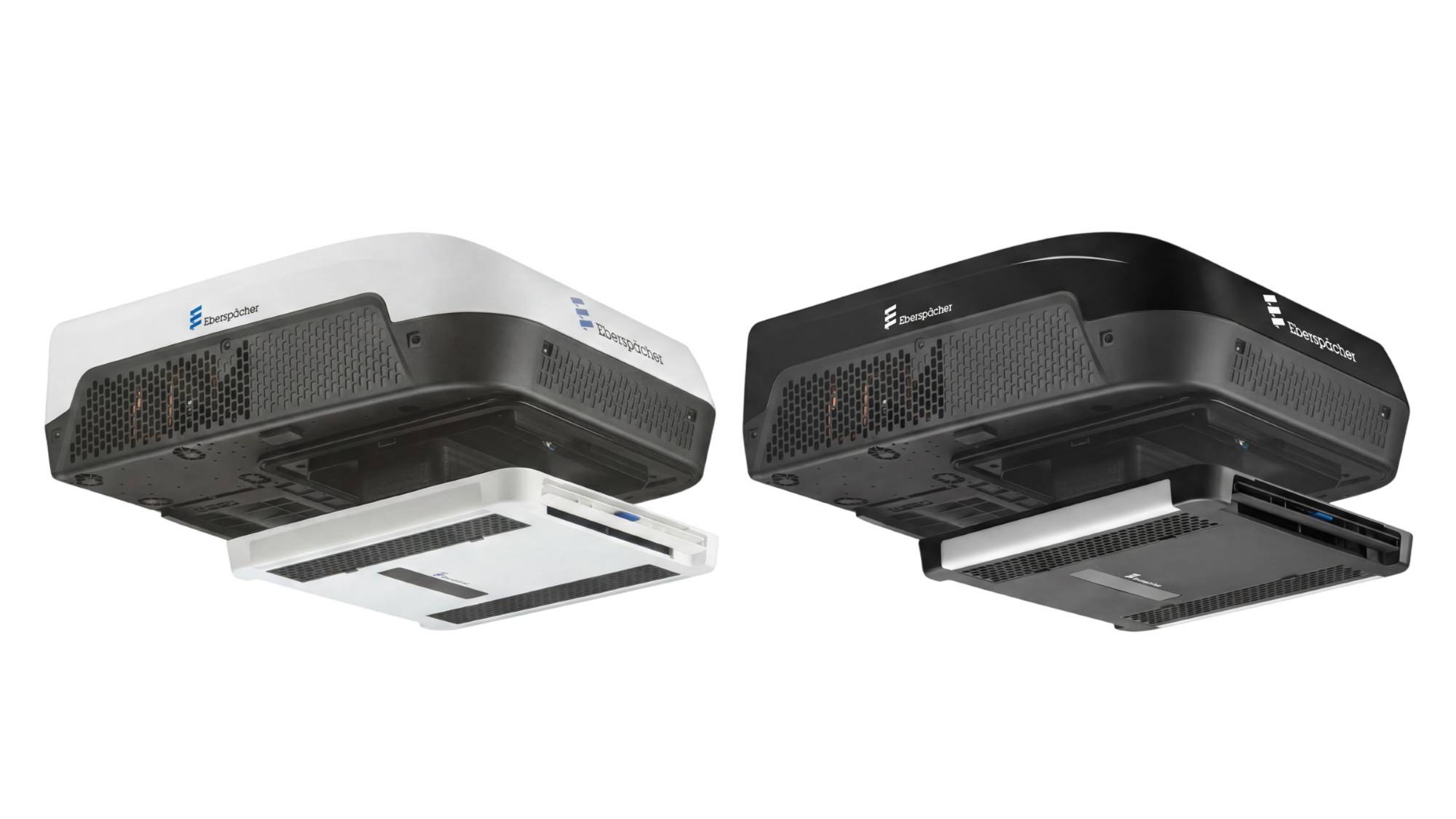
- Breezonic Slim Power. A roof air-con unit with up to 2.8 kW of cooling and a built-in heat pump, so it also warms the van when the weather turns. It fits a 750 by 650 by 225 mm footprint, leaving roof space for solar. The compressor ramps up and down with demand instead of cycling on and off, and a soft-start limits the current it pulls on a weak campsite hook-up.
- Zeliox NEO 4000. A 48-volt lithium power system that runs fridges, coffee machines and the rest off-grid. It charges from the alternator while driving, from shore power, or from solar.
- ZCM6. A plug-in control module that switches lights and other electrics wirelessly, across six programmable channels, rising to 24 with add-on modules.
The Slim Power tops a range that already includes the 1.7 kW Slim and the 2.2 kW Slim Plus, all built on one platform. The smaller Slim units are already on sale through European suppliers, so this is a range being extended upward, not a cold start.
All of it sits in Eberspächer’s motorhome climate range, next to the diesel heaters it is better known for.
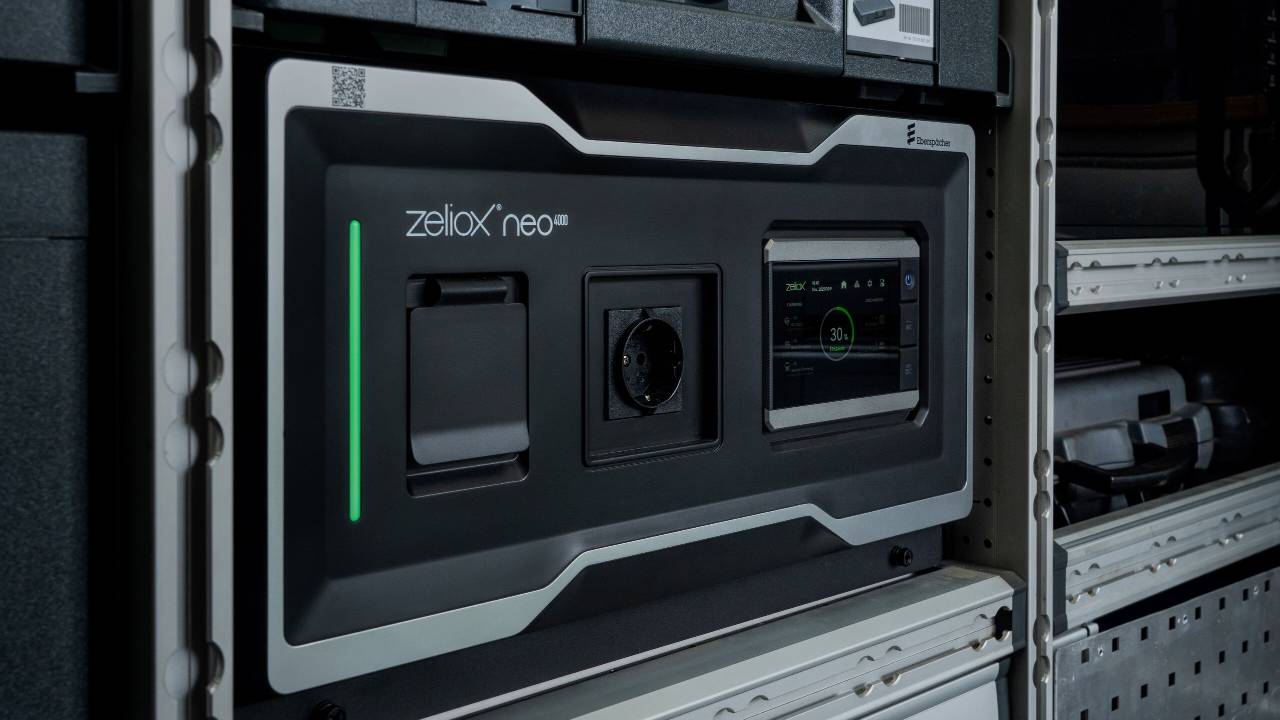 The Zeliox NEO 4000 runs a motorhome’s electrics off-grid on 48-volt lithium. Image: Eberspächer.
Why a Heater Brand Is Selling You a Power System
Eberspächer made its name burning diesel for heat. The Breezonic Slim Power heats with a reversible heat pump, drawing on the battery. Same company, opposite method.
When a business starts competing with its own best-known product, it has read where the market is going. The thread tying the three products together is 48 volts.
Air-con is the biggest electrical load in a motorhome. Run it at 12 volts off a battery and the current is punishing: thick cable, heat loss, a flat battery by mid-afternoon.
Move the same power at 48 volts and the current drops by three-quarters. That is what makes off-grid cooling practical rather than a party trick, and it is why the serious habitation kit is shifting to 48V.
Eberspächer is not alone, or even first. Dometic has launched a 48V air conditioner with a heat pump.
Truma’s second-generation Aventa heats and cools from one roof unit, and has pulled its onboard electronics into a single control system. The ZCM6 is Eberspächer’s answer to that idea.
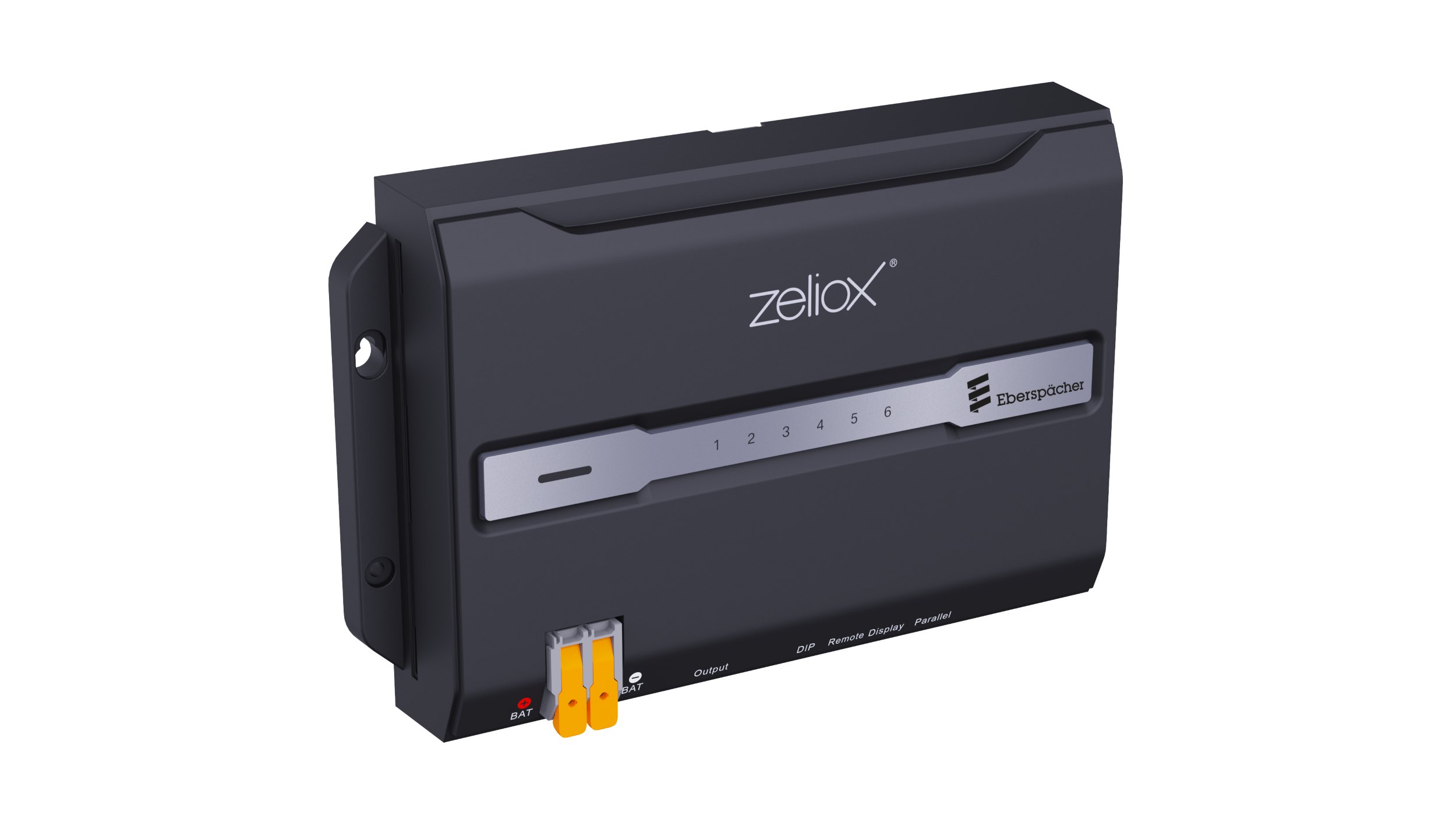 The Zeliox ZCM6 switches a van’s electrics wirelessly across programmable channels. Image: Eberspächer.
So the signal is this: the habitation electrical system is moving to 48V, and the suppliers who used to sell you one box now want the whole stack. Battery, climate, control, from one badge.
What UK Dealers and Converters Should Do
CMT is a German consumer show, not a UK launch. Not all of this will be UK-badged and on your shelf by February. The direction is set, though, and buyers are already asking the question these products answer.
Four things worth doing this month:
- Converters: get 48V in front of your build team. If you spec electrical systems, put the Zeliox NEO 4000 and its Dometic and Truma equivalents on the bench. A 48V architecture changes your wiring loom, your charge management and your warranty chain. Learn that in the workshop, not on the first warranty claim.
- Dealers: brief sales on the off-grid question. “Can I run the air-con off the battery?” used to be a flat no. At 48V it is becoming a qualified yes. A salesperson who can explain the caveats, and the cost, wins the enquiry over one who shrugs.
- Workshops: ask about training and parts now. A 48V system is a different servicing and safety job from a 12V loom. Before you take one in for a habitation service, find out what your supplier offers in training, diagnostics and spares.
- Websites: stop burying power and heating. The buyer researching a van worth tens of thousands cares about exactly this, and many stock pages still treat climate and electrics as an afterthought. The same gap shows up in how dealers handle compressor fridges and the battery question.
One question to put to any supplier at the NEC season: when does this reach the UK, and who supports it when it breaks.
What It Means for Buyers
The pull is easy to see. Stay off-grid longer, run the fridge and the air-con without a hook-up, take the chill off a spring morning without the diesel heater starting up.
The catch is price and complexity. A 48V system costs more than a 12V setup and asks more of whoever fits it.
For a buyer who wild-camps and resents paying for hook-up, the maths works. For someone who tours site to site, it is comfort they may never draw on.
The reveal in Stuttgart is a component story. The pattern behind it is the one to track. The motorhome of the next few years is being built around a bigger, smarter battery, and climate control is being pulled onto it.
The supplier who owns that battery is in a strong position to own the van. Eberspächer has worked that out. The question for the UK trade is how fast it arrives, and whether you are ready to sell and service it when it does.