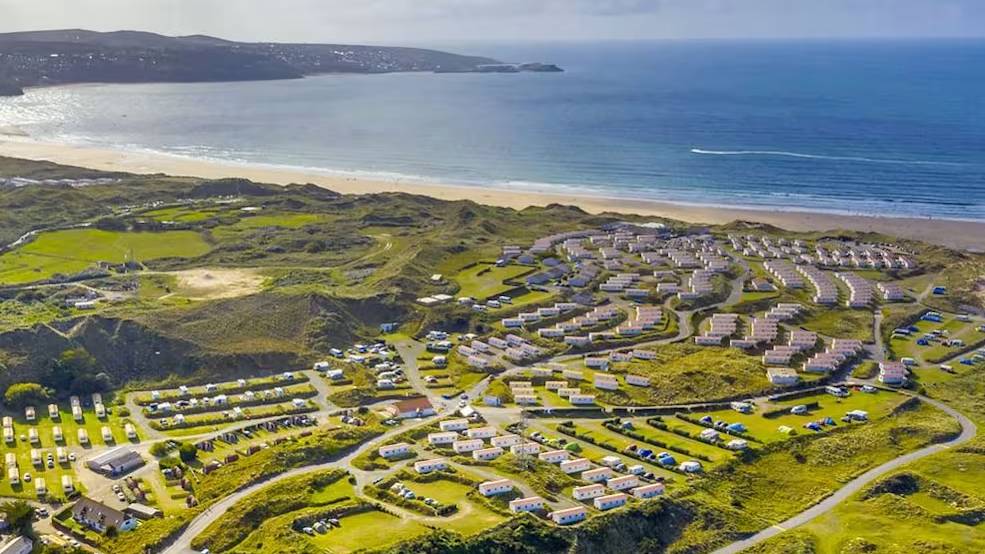
A holiday park operator has surveyed its own owners and found that owning a holiday home makes them happy. That is the press release. Treat it with the caution any firm’s survey of its own customers deserves.
There is a harder number buried in the same story, and it does not come from the survey. Searches for “static caravans for sale” are running high and have been climbing. That is the part worth a park operator’s time, because search demand is a buyer raising their hand, and it does not care how the survey was framed.
So read this as two stories wearing one headline. A marketing survey that tells you little, and a demand signal that tells you plenty.
What Away Resorts Has Actually Said
The claims come from Away Resorts’ Holiday Park Community Report, picked up this month by CaravanTimes. Away Resorts sells holiday homes across its UK parks, so the survey asks its own owners why they bought and how they feel about it.
The findings run as you would expect. The company reports that 60 per cent of owners wanted a guaranteed getaway, and 57 per cent wanted a home away from home. It says nearly two-thirds report better physical and mental health since buying, and 72 per cent of owners with children or grandchildren say screen time drops on park.
Take those at face value and they say one thing: people who bought a holiday home are glad they did. Useful colour for a sales conversation. It is not evidence the market is growing, because the survey only asked people who already own one. Nobody in the sample decided against it. A survey that samples the wider market, like the UKCCA visitor survey read for operators, tells you something an owner poll cannot.
An earlier Away Resorts owner survey, from summer 2025, put the sample at 300 owners across its 27 parks. Keep that scale in mind. These are the company’s own customers, answering the company’s own questions. Fair enough as marketing. Thin as market data.
The Number That Is Not From the Survey
The figure that matters sits outside the owner survey. Away Resorts says online searches for “static caravans for sale” top 20,000 a month in the UK, up 53 per cent on last year.
Search volume is a better signal than a satisfaction survey, because it counts strangers, not customers. Someone typing “static caravans for sale” into Google has no relationship with any park. They are a cold buyer looking to spend.
Our own check puts the demand higher than the release claims. The core term “static caravans for sale” sits around 33,100 searches a month on the UK data we pulled, with the broader phrasing peaking above 40,000 in the summer months. So the headline demand is real, and larger than 20,000.
The “up 53 per cent” part is the company’s own claim. Hold it loosely. Our data shows a strong seasonal pattern, high in summer and low in December, and a softer picture year on year, not a 53 per cent jump.
Different tools count different things, and a single phrase moves differently from the whole cluster. Trust the shape of the demand, which is large and seasonal, more than the exact growth figure in a sales release.
Either way, the demand is there. Thousands of people a month are actively shopping for the product you sell. The question is who they find.
What This Means for Park Operators and Holiday Home Sales Teams
This is not a touring-dealer story. It lands on holiday parks, holiday home sales teams and any dealer who sells static caravans and lodges. The same demand sits behind the investment going into holiday home makers, from Willerby’s 80th year to the Rix Group taking on Prestige, Victory and Atlas Leisure Homes. Three things to do with it, not three things to note.
Meet the search demand with a page, not a brochure. Thousands of people a month search “static caravans for sale” and the nearby town versions of it. If your park’s holiday homes are buried in a PDF or a “call us” box, you hand those buyers to the operator who put real prices, pitch fees and layouts on a page they can read at 10pm.
Answer the running costs before the buyer asks. The survey sells the dream. The buyer’s real worry is the bill: site fees, rates, insurance, the length of the licence agreement and what happens at the end of it. Put those on the page and in the handover pack, plainly, and give them a way to work the numbers, the way our static caravan finance calculator does. The operators who hide the costs train buyers to distrust the whole sector.
Collect proof that is not your own survey. Your owners saying they are happy carries less weight than it should, because you asked them. Independent reviews, named owner stories with real detail, and third-party ratings do the job a self-commissioned survey cannot. Gather them and put them where a buyer decides.
The Trust Problem Nobody in the Release Mentions
A happy-owner survey is built to keep one thing off the page. The holiday home and lodge park trade has a reputation problem, and buyers know it.
Consumer group Which? has reported misleading sales tactics across the caravan and lodge park industry, from unclear site-fee rises to pressure selling and murky exit terms. That reporting is the backdrop every one of your buyers carries into the conversation, whether they mention it or not.
A survey saying owners are happy does not answer that fear. Clear pricing, honest licence terms and visible independent proof do. The operator who leads with those turns the sector’s weakness into their own advantage, because they are saying the thing the nervous buyer is waiting to hear.
That is the real opportunity in this demand. Not that people want static caravans. They plainly do. It is that they want to buy one from somebody they can trust, and most of the trade is still selling them a feeling instead.
The Signal for Next Year
Strip out the survey and the story is simple. Demand for static caravan ownership is strong and easy to see in search. The buyers are there, in their thousands, every month.
What the release will not tell you is that those buyers arrive wary, and that a glossy owner survey does nothing to settle them. The parks that win next year will be the ones that answer the hard questions on the page: what it costs, what the agreement says, and who else trusts them.
So here is the question for your park. When a buyer searches “static caravans for sale” tonight and lands on your site, do they find the price, the terms and the proof they came for, or a photo of a smiling family and a form that says “enquire now”?