“Continued organic growth and increased profitability” is the headline Thule put on its third-quarter report. Read it twice, and the line that should stop a UK dealer sits further down, where the company admits the RV market weakened over the summer.
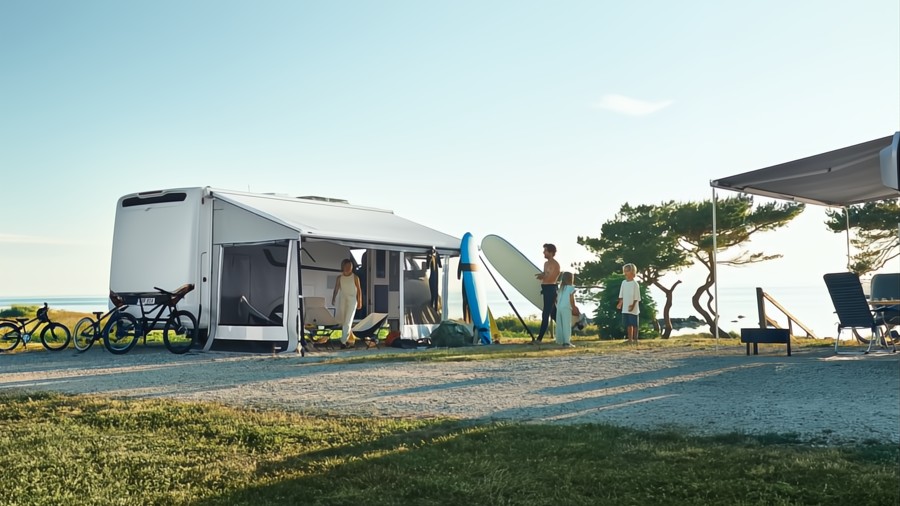
Thule Group is the Swedish maker of the awnings, bike racks and tents that hang off a good share of the caravans and motorhomes on your forecourt. In the quarter it grew sales 3% and lifted its operating margin to 20%. A strong result by any read.
But its RV line tells the more useful story. Demand for Thule’s caravan and motorhome kit was held back by one thing: fewer new motorhomes and campervans being sold. That is the same soft market you are living through, confirmed from the supplier side.
Here is the part worth your time. That RV line still grew.
What Thule’s Numbers Actually Show
Net sales for the quarter were SEK 2,603m (about £196m), up from SEK 2,528m (£191m) a year earlier. Organic growth was 1.2%. Operating income rose to SEK 521m (£39m) from SEK 453m (£34m), a margin of 20.0% against 17.9%.
A tariff refund of SEK 52m (about £4m) flattered that profit. Strip it out, and Thule says profitability still held level with last year, which was already a high mark.
This is a serious operator. Around 3,000 staff, sales in 138 markets, SEK 10.4bn through the business last year, about £785m. When Thule reads the market, the read is worth having.
Across the first three quarters, sales were flat at SEK 8,596m (about £648m), with organic growth of 2.5%. The growth did not come evenly. Thule splits its business four ways, and the gap between them is the signal.
- Active with Kids & Dogs: up 13% so far this year.
- RV Products: up 3%.
- Bags & Mounts: up 2%.
- Sport & Cargo Carriers, the biggest line: up 1%.
For an ABU reader, only one of those matters. RV Products: the awnings, bike carriers and tents Thule builds for caravans and motorhomes.
Why the RV Line Is the Signal
Thule’s RV line grew 3% over nine months, which the company calls significantly better than the market. Take that as a company claiming a win, and still the number underneath it is the one to hold onto.
Because Thule names the brake plainly. RV demand was “affected by lower sales of motorhomes and camper vans”. Not a soft patch for Thule. A soft patch for the vehicles its kit bolts onto.
The wider data backs that up. Germany is the engine room of the European RV market, and new motorhome registrations there fell 7.2% over the nine months to September, according to the German trade body CIVD. September alone was down almost a third year on year. UK touring caravan sales sit in the same long, slow decline.
None of this will surprise you. You have felt it on the forecourt all year, the same flat new-vehicle market that Trigano confirmed from the factory side.
Here is the blunt truth in Thule’s numbers. New-vehicle sales are soft, but the kit that goes on those vehicles is still selling. The owner who bought two years ago is still spending on an awning, a bike rack, a better tow setup. The money is shifting from the showroom to the aftermarket.
That is a read on where spend sits when buyers turn cautious. They stop trading up. They keep improving what they already own.
What This Means for UK Dealers
Three things to do with this, not three things to note.
Treat the aftermarket as a profit line, not an afterthought. While new-van buyers wait, existing owners are upgrading. Make sure parts, accessories and fitting are easy to find on your website and priced to sell, not buried on a page nobody reaches. The margin on an awning fit is margin you control. New-vehicle supply is not.
Work your existing owner base this winter. The customer who bought from you two seasons ago is your warm market now. A booked habitation check, a service, an accessory fit: that is revenue you can plan for while new sales are slow. Brief your team to sell to the drive, not just the door.
Do not read “market soft” as “market stopped”. Thule’s own point is that premium products hold the strongest demand. The buyer who is still spending is spending on quality. Our Used Demand Index showed the same split this summer. Stock and sell to where the demand actually is, not where it was two years ago.
The Signal for Next Year
Thule is one of the most disciplined operators in the sector. When it grows profit in a market it calls weak, and names new-vehicle sales as the drag, that is as clear a read as you will get from a supplier. The vehicles are harder to shift. The kit is not.
The dealers who come through a flat year will be the ones who made the aftermarket and the existing owner base pull their weight. Not the ones sat waiting for new-van demand to walk back through the door.
So here is the question for your dealership. When new sales are slow, is your forecourt still set up only to sell vehicles? Or are you making money from every caravan and motorhome already out there with your badge on the handover pack?