A council actually went looking for somewhere to put a motorhome aire. It asked local businesses. It asked farmers and landowners. Every one said no.
That is the story buried under the line Redcar and Cleveland councillors were given this month: dedicated overnight spaces for motorcaravans are “not currently feasible.”
“Not feasible” sounds like a budget line or a planning snag. The briefing says something blunter. The council went looking for a host, and the people it approached had “no desire or interest.”
Yesterday ABU looked at Exmouth, where a council taxed its motorhome visitors away. Redcar is the other half of the same shortage. One town had the stopover and priced it out. This one wanted the visitors and could not find anyone to take them.
What the Council Actually Found
Back in February, Saltburn councillor Philip Thomson told colleagues there was clear demand, with people already sleeping overnight in motorhomes and converted vans, and that the borough needed to do more about it.
So an officer went to work. At Thomson’s prompting, the council approached businesses across the borough and private landowners to promote a CAMpRA initiative, the Campaign for Real Aires, the lobby group pushing for a French-style aires network in the UK. The aim was serviced overnight spaces for motorhomes and self-contained campervans.
The answer came back the same from everyone.
Businesses did not want to explore motorcaravan parking. The barriers they gave were practical: car parks laid out for existing trade, limited space they needed for their own customers, and the cost of building or improving hard-standing.
Farmers and landowners did not want overnight visitors, or the shift into non-agricultural use that hosting them would mean.
No business. No landowner. No council-owned site earmarked either. The one place a motorhome can still legally stop overnight nearby is the Cat Nab car park in Saltburn, which the council says has toilets, chemical waste disposal and a fresh water supply. Past that, nothing new.
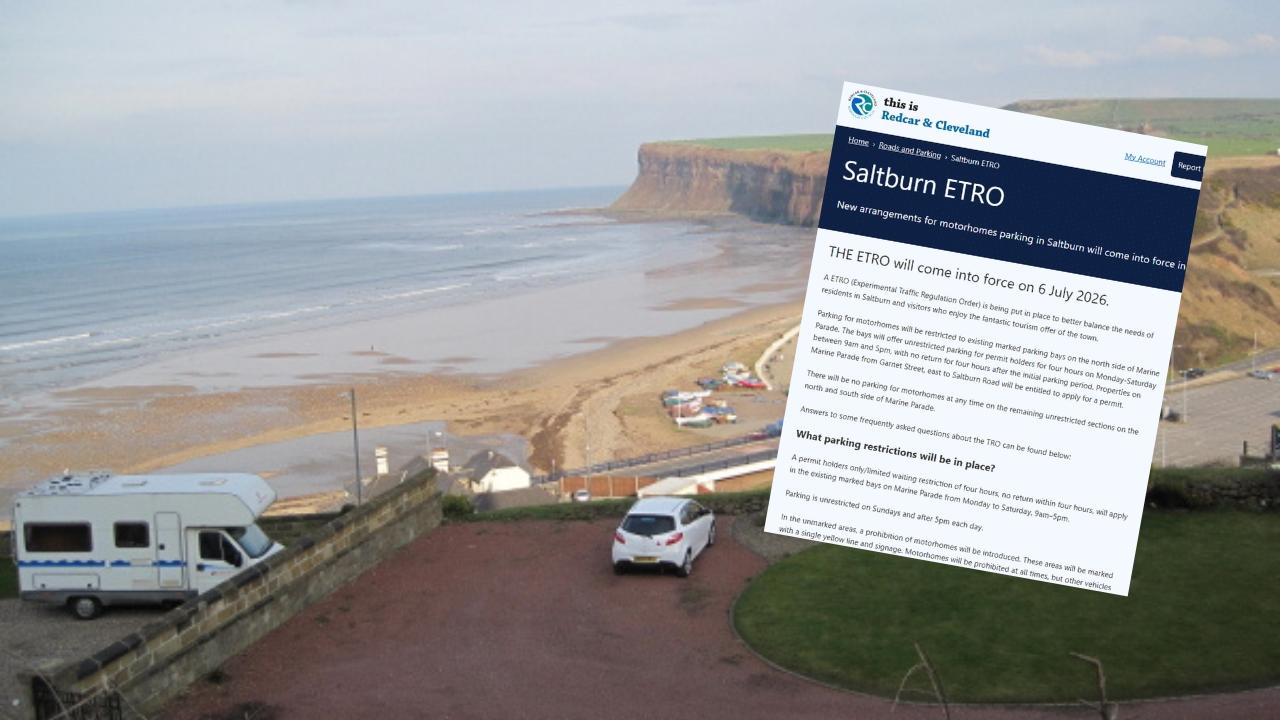
That blank sits against a crackdown. Earlier this year the council brought in an experimental traffic regulation order on Saltburn’s Marine Parade. Residents had complained that some vehicles parked free for days and, at worst, brought anti-social behaviour with them.
The order runs for about 18 months. A review at the end will test whether it has worked or simply moved the problem elsewhere.
So the council tightened the rules on where motorhomes may stop, then went looking for somewhere better to send them, and found no one willing to take them in.
Why the UK Still Has No Aires Network
France runs thousands of aires: cheap, serviced overnight stops that keep motorhome tourism moving and spending in small towns, mapped in guides like the Vicarious Media French aires directory. The UK runs a handful. British tourers feel that gap every season.
The easy explanation is that councils will not build them. Redcar complicates that. Here a council wanted the visitors, had a councillor pushing for them, and went out to find a host. The block came from the supply side.
That is worth sitting with. Grant the landowners their point first. Hard-standing costs real money. A car park owner has paying customers to seat. A farmer weighing an aire is weighing a change of use, new liabilities and strangers parked overnight against a return nobody has put a figure on.
That last part is the opening. The demand is not in question. Exmouth’s own consultation saw 87% back overnight motorhome parking, and its visitor numbers showed the spend is real.
What no one has set in front of a Teesside landowner is the sum that shows a serviced aire covering its own hard-standing and then earning on top. The barrier is not appetite for motorhomes. It is a business case that has never been written.
It can be done the other way. Up the coast, Blackpool is turning an arena site into a proper motorhome aire to pull visitors in. Same vehicle, same overnight demand, opposite result. The difference is that someone there made the sums add up.
What the Motorhome Trade Should Do
This is not a story to note and scroll past. Three things to do with it.
Know the real stopover map in your area, gaps included. Part of selling a motorhome or a campervan is selling somewhere to take it.
If your region is short on sanctioned stops, be straight about it. Point buyers at the apps that map aires and sites, and tell local owners plainly that Cat Nab still works while Marine Parade is now time-limited. Do not let the forecourt pitch promise a freedom the council is quietly trimming.
Help write the business case no one has. Dealers, holiday parks, storage sites and CAMpRA between them hold the numbers a landowner needs: overnight demand, nightly rates, spend per visit, servicing costs.
A one-page model showing a farmer or car park owner what a small serviced aire earns against what it costs to build is the document missing from every one of these refusals. Whoever supplies it changes the answer.
Watch the Saltburn review and the displacement question. When the order comes up for review, it will show where the restricted vehicles went. If they scattered to laybys and village edges, that is the argument for proper provision, and the reason for the trade to be in the room when the next committee sits.
The Part Still Missing
Put the two coastal towns side by side. Exmouth had a working stopover and taxed its visitors away. Redcar wanted the visitors and could not find a single business or landowner to house them. Demand squeezed on one coast, supply refused on the other.
The French network did not appear because councils ordered it. It grew because hosting motorhomes paid the people who hosted them. Until someone makes that case to a British landowner, in pounds, the UK’s aires map stays mostly blank, and every unserviced town becomes one more reason not to buy the van in the first place.
The demand is proven. The hosts are reachable. The number that convinces them is the part still missing. Who writes it?