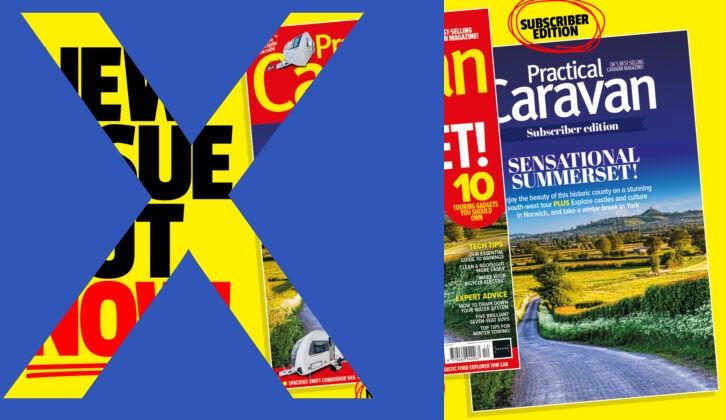
Two of the best-known names in caravan and motorhome publishing have stopped the presses. Future is closing the print editions of Practical Caravan and Practical Motorhome, according to a notice sent to contributors, with the current issues the last off the press.
Spare a thought first for the people. The news reached freelancers and staff from one day to the next, and for the writers and photographers who filled those pages it means commissions and an income some had built a career on. That is the human cost, and it comes before any talk of what it signals.
Then read the signal. Because a dealership in Cheshire is heading for administration in the same fortnight, and the two stories rhyme.
What Has Actually Happened
Both print titles are ending. The notice names issue 318 of Practical Motorhome and issue 511 of Practical Caravan as the last to go to press.
Practical Caravan first published in 1967. For most of the trade’s living memory it was the magazine a buyer picked up to compare layouts and read a tow-car test.
Practical Motorhome is the younger of the pair, and the two ran together for years. Future took them on from Haymarket in 2018.
The notice to contributors did not dress it up. It put the decision down to industry pressures that had become too hard to counter, while being clear it was no reflection on the quality of the product. Read plainly, that is a publisher saying the economics of print stopped working, not the journalism.
One thing to keep straight. This is the print editions closing. The websites, practicalcaravan.com and practicalmotorhome.com, are a separate question, and a brand name can outlive the paper it was printed on.
If you have been told “the magazines have folded”, the accurate version is narrower, and it matters. The print products have gone.
Why This Lands Harder Than One Publisher’s Decision
Print magazines have been shrinking for twenty years. Readers moved to phones, advertisers followed them, and audited circulations across UK consumer titles have fallen year after year, as Press Gazette’s annual figures keep showing. None of that is new.
What makes this one worth a dealer’s attention is where it sits. These were not fringe titles. They were the mainstream consumer press for the exact product you sell, and now the print version is gone.
Think about what those magazines did for the trade, whether you ever bought an ad in one or not. They tested vans independently, and they ran the layout comparisons a nervous first-time buyer trusted precisely because they did not come from a dealer.
They gave the whole category a shop window that no single brand owned.
That shared, independent shop window is what thins out when a title like this closes. The reviews do not vanish, they scatter, onto YouTube channels, owner forums, club magazines and whatever a buyer’s search throws up.
Here is the part that should sharpen your attention. The caravan review that used to sit in a magazine a buyer trusted now has to come from somewhere. More and more, that somewhere is you.
The Cheshire Dealer Feeling the Same Squeeze
The same weeks that took the magazines brought bad news for a long-standing dealer. Leisure Sales, a 17-acre site at Sandbach in Cheshire with a showroom, an accessory store and a 10-bay workshop, has filed a notice of intention to appoint administrators. Its directors cited a general decline in the caravan industry.
Restructuring firm Leonard Curtis is handling the process and seeking a buyer, with the business still trading while it looks for a rescue. The directors had already tried cutting headcount and a sale and leaseback of the property, the firm says, before cashflow pressure led to the filing. Twenty-one jobs are at risk, though a sale as a going concern could save them.
Be fair about the difference. Future is a large, profitable publisher cutting a print edition it had decided no longer paid. Leisure Sales is a single distressed business fighting to survive. These are not the same kind of event, and it would be wrong to pretend they are.
What they share is the weather. A publisher dropped a print product because the sums no longer worked in a shrinking market. A dealer hit the wall because the sums no longer worked on a big forecourt in a shrinking market.
A category that is flat to falling squeezes the heaviest fixed costs first, and a print run and a 17-acre site are both heavy fixed costs. Same pressure, two very different businesses, one fortnight. It is the same flat market that left show footfall stuck this year and has motorhome volumes outrunning caravans.
What This Means for UK Dealers
Three things to do with this, not three things to note.
Own the review your buyer used to find in a magazine. The independent road test is thinning out, so fill the gap on your own site. Put honest, specific walkarounds of the vans you actually stock on your product pages and your YouTube channel, warts and all. A buyer who once reached for Practical Caravan is now reaching for a search bar.
Do not quietly move your marketing budget to where the magazine spend used to go. When a channel closes, the easy reflex is to shift the money to the next obvious thing. Ask where your buyers actually are first. For most dealers that is Google and YouTube, not the next print title or a boosted social post.
Audit how you collect and show proof. Magazine awards and road tests were third-party proof you could point to, and as that layer shrinks, your own proof carries more weight. Check your Google reviews, your testimonials and any independent awards your stock has won. Make sure they sit on the page where a buyer decides, not buried on an “about us” tab.
What It Means for Buyers
For the buyer, a familiar source of independent advice has gone quiet. The person who liked holding a magazine, reading a considered tow-car test and comparing layouts at the kitchen table has lost one of the places they did that.
They have not stopped wanting the advice. They have lost one route to it. That demand moves to YouTube reviewers, owner forums, the clubs and dealer websites, and it lands with whoever earns their trust there.
The dealer who treats that as an opening, not a loss, picks up the buyer who no longer knows where else to look.
The Signal for Next Year
The print closures and a dealer in trouble are not a run of bad luck. They are two readings off the same gauge: a market that has stopped growing is squeezing the players who carry the heaviest fixed costs and the thinnest margins.
For the writers who have lost commissions and the staff at Sandbach whose jobs hang on a sale, none of that is any comfort, and it should not be glossed over.
For the dealers still standing, the lesson is plain enough. The old middlemen between you and your buyer, the trusted magazine, the big-footprint forecourt, are thinning out. The trust they used to carry has to live somewhere now.
So here is the question for your dealership. When the independent voice that reassured your buyer goes quiet, who do they turn to? It can be you, but only if you have already built the place they land.