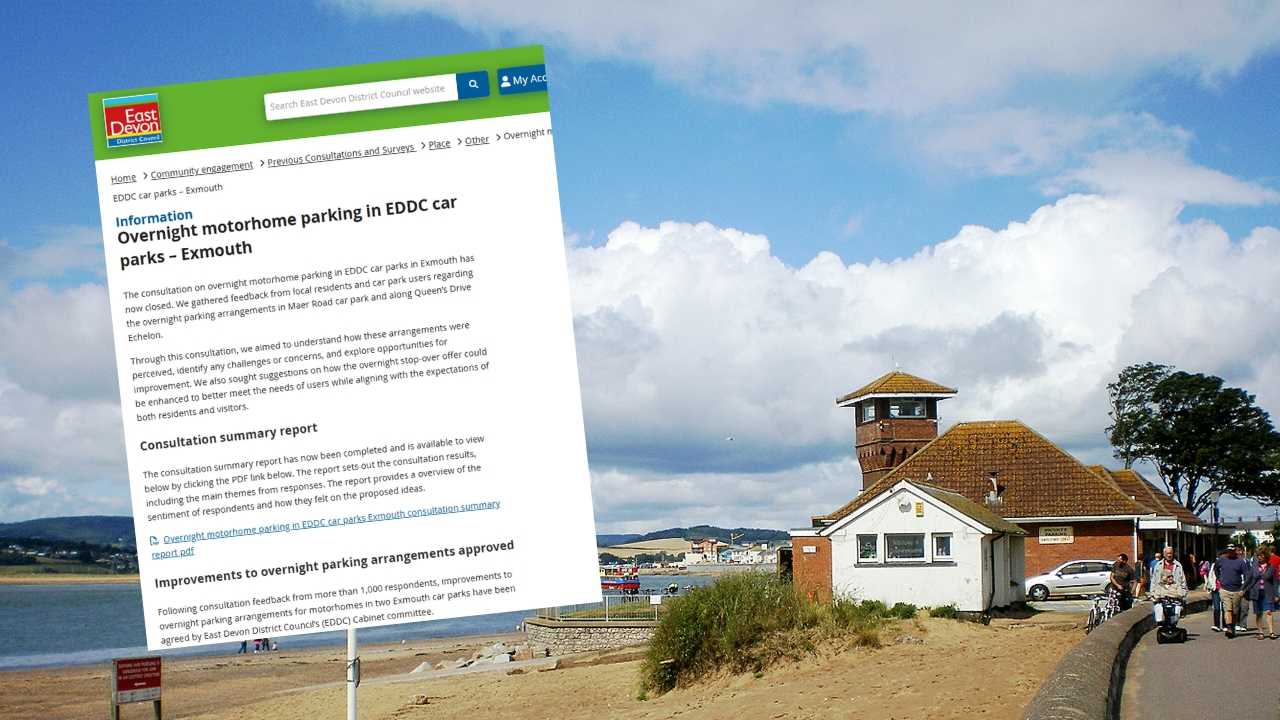
Raise the price of an overnight stop, cap the stay, lock out return visits, and promise facilities you then fail to build. What happens to demand?
Exmouth now has the number. Paid motorhome stopovers at its two seafront car parks fell 43% in the year after the overnight fee nearly doubled.
A report for East Devon District Council shows stays at the Maer Road and Queen’s Drive Echelon car parks dropped from 4,660 to 2,664 across the ten months to September 2026.
The trigger was a rise in the overnight charge from £11 to £20 on 1 November 2025. It came with a two-night cap, a 72-hour lockout between stays, and a RingGo-only payment trial.
The council collected £2,020 more for the year. It banked £53,280 against roughly 2,000 fewer visits. The water and waste facilities that were meant to justify the higher fee are still not built.
For anyone whose trade depends on people choosing to tour in a motorhome, those three numbers sit together and tell a story worth reading.
What the Numbers Actually Show
Start with the demand response. An 82% price rise met a 43% fall in paid stays. Owners were asked to pay nearly double for a worse stay, and a lot of them stopped turning up.
That is a sharp reaction for a seaside town that motorhomers used to treat as an easy overnight. It tells you the overnight-stop market is price-sensitive, and that the people it loses first are the ones passing through who had a choice.
Now the money. The council is up £2,020 on the year. Set that against close to 2,000 visits that did not happen. Each of those visits was someone who might have bought a coffee, a meal, fuel or a few bits from the shops before moving on.
One campervan visitor told the council they came to sleep and leave, then stayed, explored the town and spent the day. That is the whole economic case for a stopover in one anecdote. It is also the spend Exmouth now collects 43% less of.
The enforcement figures confirm the design. Penalty notices rose from 85 to 97, a jump from one notice per 55 overnight sessions to one in 27.
A quarter of every £20 stay, £13,320 across the year, is ring-fenced to pay for that enforcement. The scheme is built to police the vehicles that remain, not to attract more.
Then the part that should bother the trade most. The fresh water tap, the grey wastewater point and the chemical toilet disposal at Maer Road were approved by the council’s cabinet in July 2025. Owners were charged the higher fee from November.
A year on, the facilities are still unfinished, held up by complications with South West Water and a stretched engineering team. The council’s own feedback notes that some people expected the facilities before the increase, not long after it.
Charge first, deliver later, or not at all. That is the sequencing a motorhomer remembers, and talks about.
What the Town Actually Asked For
Here is the part that turns this from a parking row into a lesson. The council ran a public consultation before the changes, and the public backed overnight parking hard.
Of 1,043 responses, 87% supported overnight motorhome parking in Exmouth. Just 10% were against. Around a third of respondents did not currently own a motorhome, so this was not only owners voting for their own convenience. The town wanted these visitors.
It also told the council what to charge. At the time, the overnight fee was £11, a £3 premium over the £8 day rate. Nearly 60% called that about right, and another 34% said it was too little. Only 6.7% thought it too much.
Asked to name a different figure, the most popular answer was £14. Most who wanted a change named something under £20.
No reading of that consultation produces £20. The public endorsed a stopover fee somewhere around £11 to £14. The council set it at £20, a £12 premium over the day rate, four times the premium that most respondents had just called fair.
The stay length went the same way. Seven in ten said three nights was about right. The council cut the limit to two.
Grant the council its logic. It raised the fee to cover the cost of managing and building the facilities, and a third of respondents were open to paying more.
But the facilities were the public’s single biggest ask. Waste disposal, a chemical point and fresh water topped every list. Respondents said it plainly: provide them, or the sites are not suitable, and spend the extra money on them. Some drew the comparison to European aires themselves.
So the mandate was specific. Charge a modest premium, and build the facilities. Twelve months on, the fee is nearly double what the public backed, and the facilities they asked for are not in the ground.
Why This Matters Beyond One Devon Town
The UK already runs a thin aires network next to France, where thousands of low-cost, well-serviced stopovers keep motorhome tourism moving and spending. British tourers feel that gap every season, and the trade has watched the comparison for years through guides like the French aires directory.
Exmouth matters because it is a working example of the UK pulling the wrong way. A town that had a usable, affordable stopover made it dearer, tighter and no better served. The predictable result followed.
Set it next to Blackpool, where an arena site is being turned into a proper motorhome aire to pull visitors in. Two councils, two readings of the same vehicle. One sees a guest with a wallet. The other sees a parking problem to be priced down.
Every council that treats stopovers as a revenue line rather than an amenity makes the ownership case a little weaker. A motorhome is only as useful as the places it can stop.
Shrink that map, or make it costlier and less welcoming, and you chip at the reason people buy one. That reaches the forecourt eventually, in a market where motorhome registrations are already flat.
What It Means for the Motorhome Trade
This is not a story to watch and move on from. There are specific things to do with it.
Brief your sales team and your buyers honestly. Part of selling a motorhome is selling the freedom to use it. Know the real stopover picture in your region, point owners at the apps and networks that map aires and campsites, and do not let the showroom pitch oversell a touring freedom that councils are quietly trimming.
Feed the economic case to councils that will listen. Nearly 2,000 lost visits for an extra £2,020 is the argument against pricing motorhomers out, made with a council’s own data.
Better still, Exmouth’s residents already made the case for you. 87% backed overnight parking, and most wanted a fee well below the one they got. Local dealers, parks and tourism bodies have standing to put that in front of a committee.
Track the consultations. Exmouth is reviewing again in October 2027, and it will not be the only town revisiting overnight charges. These schemes are usually decided by a handful of people in a room, with residents’ complaints loud and the trade silent. Turning up changes that.
Watch whether facilities actually land. A council that charges for services it has not installed is exposed, to owners and to scrutiny. If you support the case for stopovers, the fastest way to lose it is to let “pay more, get the same” become the pattern buyers expect.
The Choice On the Table
Exmouth asked its residents, got a clear answer, and then charged more and delivered less than that answer called for. The result: fewer visitors, a town that collects less of their money, and the facilities people wanted still waiting on a water main.
The other reading is sitting up the coast in Blackpool. Councils will keep choosing between the two, and most will decide with the trade absent from the room.
The data to change their minds now exists, some of it written by the residents themselves. The question is who takes it to them.