
Fiamma’s F43van Awning Is a Quiet but Important Signal for the UK Campervan Market
Discover why Fiamma's F43van awning signals a major shift in campervan design. Learn the features changing the UK market—read the full analysis.
NEWSCARAVANS, MOTORHOMES & CAMPERVANS
Will Hawkins
5/26/20252 min read
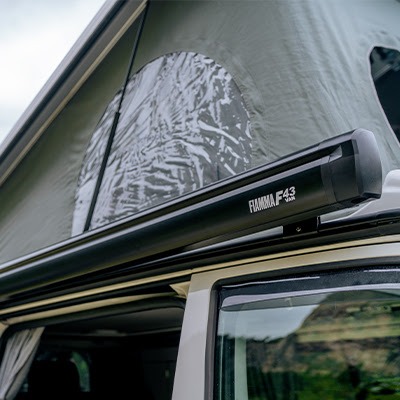
At first glance, the new Fiamma F43van looks like a routine accessory update. A compact awning, sleeker casing, a few clever features.
Look closer, and it’s something more telling.
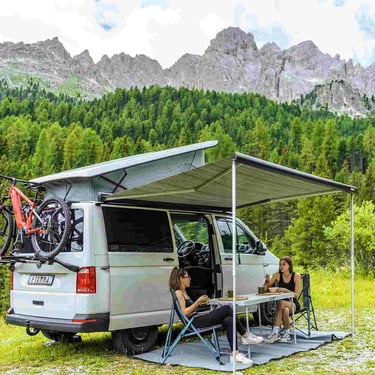
This product isn’t aimed at traditional motorhomes or large coachbuilt vans. It’s designed explicitly for modern campervans and minivans, including vehicles with elevating roofs — the fastest-growing and most competitive segment of the UK leisure vehicle market.
That distinction matters.
What Fiamma Has Actually Built (Beyond the Product Copy)
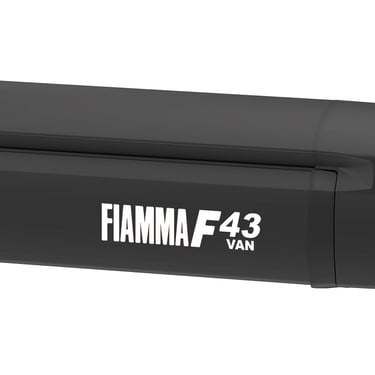
Strip away the brochure language and the F43van is about compatibility, weight, and urban usability.
Three things stand out:
1. Lower profile, lower mounting height The compact cassette and aerodynamic design allow the awning to be mounted lower than many traditional systems. That means fewer height issues in car parks, ferries, and urban environments — exactly where campervan owners still want to use their vehicles day-to-day.
2. More usable space, not just more fabric The ability to tilt the canvas at a negative angle isn’t a gimmick. It increases sheltered space while improving rain run-off and headroom — a practical response to how people actually use campervans on short breaks and shoulder-season trips.
3. Modular expansion without complexity Compatibility with pole-free enclosures like the Room Van Premium is a nod to speed and simplicity. Today’s campervan buyer doesn’t want a campsite build project. They want usable space, fast.
Add integrated LED provision and reduced overall weight, and the design brief becomes clear: lighter vehicles, faster setups, fewer compromises.
What This Means for the UK Campervan Market
The UK campervan sector has matured fast — and buyers are sharper.
They are:
Researching earlier
Comparing accessories alongside base vehicles
Factoring in car park access, ferry pricing, and daily usability
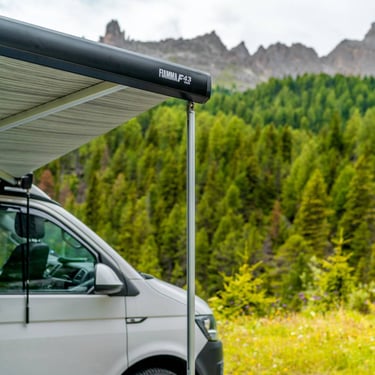
An awning that fits cleanly to a VW Transporter-style van, works with a pop-top, and doesn’t scream “afterthought” becomes part of the buying decision, not an upsell after delivery.
That shifts the commercial dynamic.
Dealers who treat accessories as bolt-ons will lose margin to those who package and present complete, lifestyle-ready vehicles.
The Consumer Significance Is Simple
For end users, the appeal is obvious:
More sheltered living space without turning a campervan into a motorhome
Easier access to urban spaces and car parks
Faster setup, fewer poles, less faff
Cleaner aesthetics that match modern vans
This is about maintaining flexibility, not adding bulk.
And that’s exactly what today’s campervan buyer is paying for.
Why This Matters for the Industry
This launch reflects a broader shift suppliers can’t ignore.
Campervans are no longer a stepping stone to motorhomes. For many buyers, they are the end product. That changes expectations around accessories:
Weight matters more
Vehicle height matters more
Aesthetics matter more
Everyday usability matters more
Accessory brands that still design primarily for large coachbuilts are designing for yesterday’s growth curve.
Fiamma isn’t.
What This Means for Dealers and Converters
If you sell or convert campervans in the UK, this isn’t just a product update — it’s a merchandising prompt.
Ask yourself:
Are your accessory pages still generic PDFs?
Do you show fitted examples on real vehicles?
Do you explain height, weight, and urban practicality clearly?
Because buyers are already asking those questions — whether your site answers them or not.
Bundled, well-explained accessories reduce friction, shorten sales cycles, and protect margin. Poorly explained ones get price-checked online.
The Bigger Takeaway
The F43van isn’t revolutionary. That’s the point.
It’s a product designed around how campervans are actually used in 2026 — not how the industry used to imagine them.
Accessory brands that understand that reality will grow with the market. Those that don’t will be quietly sidelined.
The signal is clear.
Insights
Stay updated with trends in outdoor leisure.
Subscribe
Connect
Call +(44) 07725 003675
© 2026 Digi-Business Ltd All rights reserved
Resources
Registered Address:
The Adventure Business Update
c/o Digi-Business Ltd (t/a Digital Business)
Lytchett House
13 Freeland Park
Wareham Road
Poole
Dorset
BH16 6FA