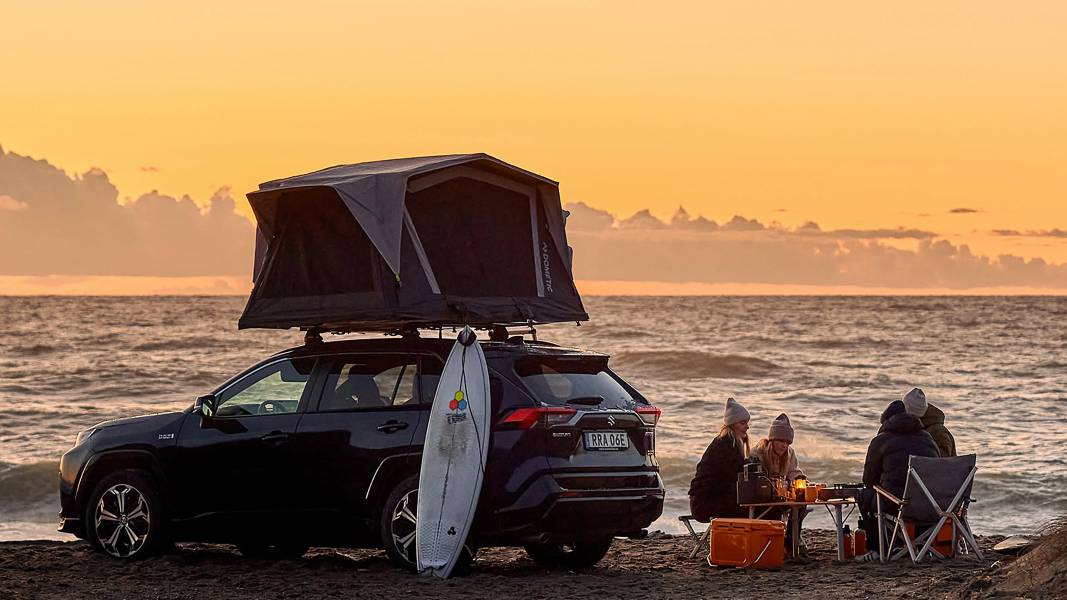
Dometic has taken a SEK 4.2bn writedown, around £320m, and pinned most of it on the sustained downturn in the North American recreational vehicle market. It is the second time in two years the company has cut the value it carries against that market.
That is the headline most will run with. Look closer, and the more useful story for a UK dealer is the one sitting underneath it.
In the same quarter, Dometic grew. Net sales rose to SEK 5,116m (about £386m at late-October exchange rates), organic growth of 3%, after a 6% fall a year earlier. The loss on the page is an accounting writedown, not a cash crisis.
What it tells you is where the biggest supplier in the industry now thinks the money is. And where it doesn’t.
What the Numbers Actually Say
Strip out the impairment and Dometic had a steady quarter.
Start with what an impairment is. It is an accounting move, not a cash one: a company decides an asset on its books is worth less than the value it carries, and writes the gap off. No money leaves the business. It is an admission about value, not a bill.
EBITA before one-off items came in at SEK 495m (about £37m), a margin of 9.7%, close to last year’s 10.4%.
The SEK 4,229m (about £320m) goodwill impairment that turned the result into a SEK 4,380m (£330m) loss is non-cash. It does not touch EBITA, cash flow or the debt ratio.
What the impairment does is formal. Dometic has lowered the carrying value of three parts of the business: SEK 1,835m (£138m) against Land Vehicles, SEK 2,139m (£161m) against Mobile Cooling Solutions and SEK 255m (£19m) against Global Ventures. The company pins it mainly on the sustained downturn in the North American RV market.
That market is still falling. RV shipments in North America were down 14% in the year to August, and retail registrations fell by about the same.
Here is the part that matters. Dometic took a SEK 2.0bn writedown, around £150m, on the same North American RV business back in 2024. Two cuts in two years is not a blip.
It is management telling the market it no longer expects new-build volumes to recover to the old highs any time soon.
The Signal Behind the Writedown
So where did the growth come from, if not new vans?
The aftermarket. Across the group, the Service and Aftermarket channel grew 5% organically in the quarter. In Europe, Dometic’s Land Vehicles arm grew 9% organically, and the company says that was driven mainly by Service and Aftermarket.
New build is not the engine right now. Servicing, spares and upgrades for the vans already on the road are.
Price is doing the rest. Dometic has pushed through increases to cover higher raw material costs, and that is holding margin while volumes stay soft.
Credit where it is due: the OEM channel, the kit fitted into new builds, grew 4% organically in the quarter, so factory demand is not in freefall.
The company is also cutting capacity to match the market, with a new restructuring programme aimed mainly at Land Vehicles in the Americas and targeting SEK 215m (about £16m) of annual savings by 2028.
The harder near-term number for a UK reader is European demand. RV registrations across Europe fell by around 16% in the third quarter. New-van appetite is thin, and the biggest supplier in the sector is planning around that, not waiting it out.
What This Means for UK Dealers
Dometic kit is in almost every van on a UK forecourt. The fridge, the rooftop air con, the Seitz windows and rooflights, the toilet, often the hob and sink. When the biggest fitted-equipment supplier tells you its steadiest growth is coming from aftermarket and service, not new build, it is handing you your own plan.
Three things to do this month:
- Treat the workshop and parts counter as a profit centre, not a bolt-on to new sales. Audit your Dometic spares: common fridge elements, air con parts, Seitz seals and blinds, toilet spares. Fix same-week and you keep both the customer and the margin.
- Build a retrofit offer for existing owners. Air con, a compressor fridge swap, an extra rooflight, solar. The pool of ageing vans is large and their owners are staying put, not trading up.
- Plan for more component price rises. Dometic has said increases are feeding through gradually. Pass them on through your own parts and labour rather than absorbing them quietly, and tell customers why.
One more. Brief your sales team on trading down. Dometic flagged it plainly: buyers are choosing cheaper options. Have well-specified used and entry models ready, and sell the ownership relationship, the servicing and the parts, not just the unit on the day.
This is the same shift that sat under Thetford’s move to buy out its North American distributor. The big suppliers are reorganising around service and spares. The dealers who read that early will be ahead of the ones still waiting for new sales to carry them.
What It Means for Owners
For the person who owns the van, two things follow.
Kit is getting dearer. Component price rises feed into the cost of a new van and into the bill when a part needs replacing. Buying sooner, or keeping what you have well maintained, both make sense on different budgets.
And the sensible money is on keeping the current van going. A serviced fridge, a working air con unit and a sound set of windows cost far less than changing the whole van. The dealer who makes that easy earns the next sale when it finally comes.
The Bigger Signal for 2027
Dometic has shown its hand. New-build demand is soft, and the company has stopped pretending it will snap back. Margin is coming from the aftermarket and from price, not from volume.
The blunt truth is that this is a supplier reading the market more honestly than some of the trade will want to. The vans already on the road are the opportunity now, not the ones still to be built.
So the question for your dealership is a simple one. Is it built around the showroom, or around the workshop? For the next year or two, the second one is where Dometic is making its money.