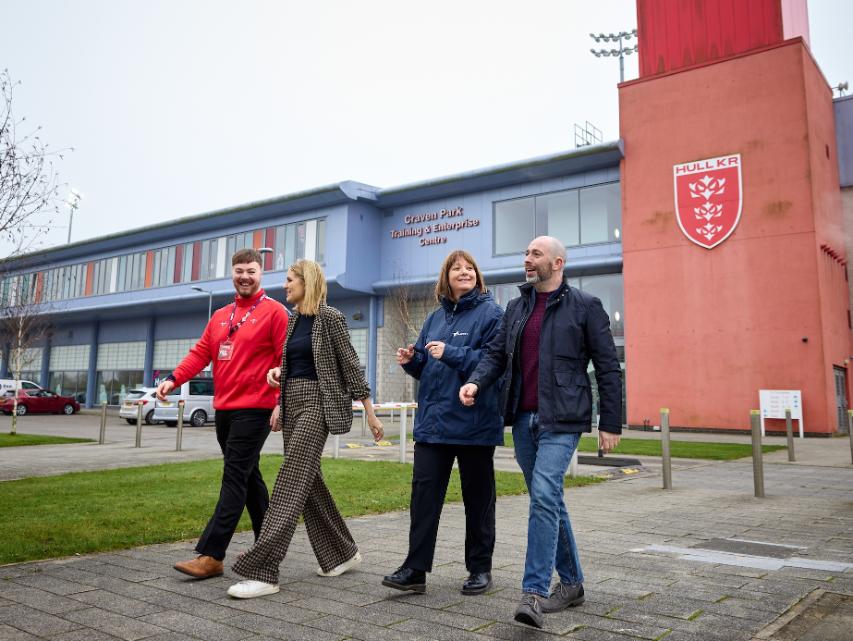
Willerby has opened its staff car park to Hull Kingston Rovers fans on matchdays, with a share of the takings going to two local charities.
On paper, it’s a community story. Look closer, and it’s a lesson in using an asset you already own, at hours you’re not using it, to buy goodwill with the people who live next door.
That lesson travels well beyond Hull.
What Willerby Has Actually Agreed
Strip out the PR and the deal is simple:
- Willerby’s 250-space staff car park off Marfleet Lane, east Hull, is open to fans for Hull KR home games across the 2026 season.
- Hull KR’s stewards manage it. Willerby doesn’t staff it.
- Fans with a seasonal parking permit get priority. Any spaces left are sold match by match.
- Willerby donates a share of the proceeds to Dove House Hospice and Hull and East Yorkshire (HEY) Children’s University, its two charities of the year.
The release doesn’t say what fans pay or what share goes to the charities. That’s the one number that would tell you how much this raises.
There is a precedent. Willerby ran the same car park for Coldplay’s two sold-out shows at Craven Park in August 2025, and says it raised £5,125 for the same two charities.
Why a Car Park Deal Is a Sector Story
The timing isn’t luck. Hull KR won the Super League Grand Final, the Challenge Cup and the League Leaders’ Shield in 2025, then beat Brisbane Broncos in the World Club Challenge in February. Demand followed: the club says 10,000 season passes went for 2026, at a ground that holds about 11,000.
More fans means more cars on residential streets. Hull KR’s ticketing manager, Harry Spillings, says the scheme is partly about “reducing parking in residential areas”.
That’s the real signal. Willerby’s factory sits a few minutes’ walk from Craven Park. A manufacturer with a large site in a residential area has neighbours, and neighbours have long memories.
The cost to Willerby is close to nil.
Willerby says matches fall at weekends and in the evenings, outside its operating hours. The stewards are Hull KR’s. The tarmac was already there.
Let’s be fair. This is a modest scheme, and Willerby isn’t claiming otherwise.
It also lands in the year the business marks 80 years since its founding, on top of a long run of sustainability reporting. Local reputation is part of the same brand story.
What This Means for Holiday Park Operators and Dealers
Most of Willerby’s products end up on holiday parks, and most of those parks have neighbours, a parish council and a planning file. Goodwill built in a quiet year is what you draw on when you apply to add pitches or extend your season.
So ask a blunt question: what do you own that sits empty when your neighbours need it?
- Car parks and overflow areas. Many parks and dealer forecourts have spare space for parts of the year. Is there a local event, school or club that needs it?
- Venues and facilities. A clubhouse, function room or show area that sits idle midweek.
- The handling. Willerby let Hull KR’s stewards run the operation. Partner with an organisation that already has the people and the insurance, so the load doesn’t land on your team.
- The story. Choose charities your staff pick, as Willerby did, and publish what you raise. A named figure is more credible than “supporting the community”.
Dealers who sell holiday homes or park homes can make it part of the pitch too. Buyers ask how a park gets on with the village. Have an answer that isn’t a shrug.
The Bigger Takeaway
This isn’t just a parking scheme. It’s a manufacturer treating its neighbours as stakeholders, at almost no cost.
Holiday parks live or die on local consent. If your only contact with your neighbours is a planning notice, you’re already behind.
What could you open up before your next application goes in?