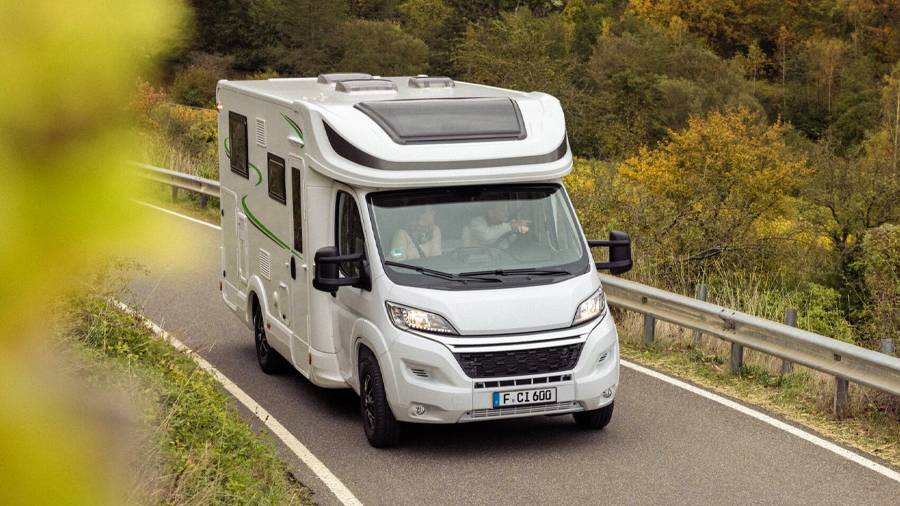
Germany’s caravanning association, CIVD, is marking a win it has chased for decades. Across the EU, holders of a standard car licence will be able to drive motorhomes up to 4,250kg, up from 3,500kg.
That’s settled EU law, not a proposal. It still has years to run before it reaches a driver in Düsseldorf.
And it doesn’t apply in Britain at all.
That last point is the story for UK dealers. The continental market your stock comes from is about to get 750kg of headroom. Your buyers under 46 are not.
What Brussels Has Actually Agreed
Strip out the advocacy and here’s what the law says.
The change sits in Directive (EU) 2025/2205, the EU’s fourth driving licence directive. It was adopted on 22 October 2025 and came into force on 25 November 2025.
Under it, a category B licence covers a motor caravan above 3,500kg and up to 4,250kg. There’s a condition: the driver must first complete a training course, pass a test, or both. Each member state picks the format.
The same motorhome can also tow, as long as the combined weight stays within 5,000kg.
Timing is the part the headlines skip. According to CIVD, member states must write the rules into national law by the end of November 2028 and apply them by the end of November 2029. Germany expects to implement in 2029.
The directive also lets drivers of other alternatively fuelled vehicles up to 4.25t skip the extra training once they’ve held a B licence for two years.
The directive text carves motor caravans out of that rule, so on our reading every motorhome above 3.5t will need the course or test, whatever powers it. German motoring club ACE reads it differently, so expect that to be settled as countries draft their own rules.
Why the Weight Limit Moved
CIVD’s case is simple. Modern motorhomes are heavier because the rules made them heavier.
Euro emissions kit, AdBlue tanks and driver assistance systems all add weight before a customer adds anything. Then come the extras buyers actually want: lithium batteries, solar, awnings, satellite dishes, e-bikes.
On a 3.5t plate, every one of those comes out of payload. That’s the squeeze UK dealers already know. A van that looks perfect in the brochure can be close to legally full with two adults, water and a weekend’s kit on board.
CIVD also frames the move as opening motorhome holidays to younger buyers. That matters. In Europe, as here, the younger buyer is the one most likely to hold only a post-reform car licence.
Where Britain Stands Right Now
The UK left the EU before this directive was agreed. It has no obligation to copy it.
Here’s the position today:
- Passed your test before 1 January 1997? Your licence includes C1, so you can drive a motorhome up to 7.5t. To keep C1 past 70, you need a medical.
- Passed from 1997 onwards? You’re capped at 3.5t. That covers almost every driver under 46.
- Driving a zero-emission vehicle? Since 10 June 2025, B licence holders can drive electric or hydrogen vehicles up to 4.25t with no extra training, and tow up to a 7t combined weight.
That last change shows Britain will move on licence weights when it suits policy. It also shows the gap. The UK widened the limit for zero-emission vehicles. The EU widened it for motorhomes, whatever they run on.
So will Westminster follow? The signal so far is cautious.
In January 2026, transport minister Simon Lightwood told Parliament the Department for Transport hadn’t yet assessed the case for 4.25t motorhomes on a B licence. He said the department was considering whether to bring in similar measures.
The NCC backs the change. In April 2025, before the directive was final, it said it was talking to the driving standards authorities to push for an early decision, and expected the UK to adopt it in time.
Expected isn’t scheduled. There’s no consultation open and no date.
What This Means for UK Motorhome Dealers
Here’s the blunt truth. For the next few years, your stock will be designed for a European buyer with more weight headroom than your British buyer has.
Continental manufacturers don’t build for the UK alone. Groups like Trigano and Erwin Hymer build for the whole European market, and Britain is one export destination among many.
When 4.25t becomes a car-licence vehicle across the EU, expect more ranges engineered around that number, with 3.5t versions for markets that need them. The risk is a UK-plated van that carries less than its continental twin.
What you can do this month:
- Ask your manufacturers the 3.5t question now. Which models will stay available on a 3.5t plate after 2029? What payload will those versions carry? Get it in writing before your next order cycle.
- Put the plate weight and real payload on every listing. Not buried in a PDF. Buyers comparing a 3.5t and a 4.25t version of the same layout need to see the difference at a glance.
- Brief your sales team on licence rules. The 1997 cut-off, C1 at 70 and the zero-emission exemption are all live questions on the forecourt. A confident, correct answer builds trust. A wrong one loses the sale, or worse, sends a customer out overweight.
- Make payload part of every handover. Show the buyer what’s left once water, gas and passengers are in. It protects them and it protects you.
If you sell electric campervans, there’s an immediate opportunity. The 4.25t zero-emission rule is already UK law, and most buyers have never heard of it.
Demand is there: Wellhouse sold out its electric Kia PV5 camper. The NCC’s free EV towing guide is a useful starting point for staff.
What It Means for Buyers
Nothing changes in the UK yet. A post-1997 driver still can’t legally drive a 3.8t diesel motorhome on a car licence, whatever they read about Europe.
The useful message for customers is clarity, not hope. Buy for the licence you hold today.
If that means a 3.5t van, pick one with payload to spare. If the UK does follow the EU, a driver who later adds training could move up a weight class at their next purchase.
The Bigger Signal
Let’s be fair. This is a good change, and CIVD and the European Caravan Federation earned it. It fixes a rule written for motorhomes that weighed far less than today’s.
The uncomfortable part is the timing gap. By late 2029, a 30-year-old in Lyon could drive a 4.25t motorhome after a short course. Unless Westminster acts, a 30-year-old in Leeds still won’t, unless the van is electric.
The dealers who handle that well won’t wait for the DfT. They’ll get the payload conversation right now, push their suppliers for UK-friendly specs, and back the NCC when a consultation opens.
When it does, will your voice be in it?